
A Black Friday marketing strategy works best when you build it in the weeks before the sale, not on the day. This year Black Friday is November 27 and Cyber Monday is November 30, so you have about 25 days to plan, build your list and launch a campaign that does not rely on discounts alone.
This guide is for WooCommerce store owners, WordPress agencies and plugin sellers. You get 11 steps in the order to act on them, a four-week calendar, and the real numbers from last year’s sale season to size your plan.
Key takeaways
- US shoppers spent $11.8 billion online on Black Friday 2025 and $14.25 billion on Cyber Monday, and 57.5% of Cyber Monday sales came from phones (Adobe).
- Email and text together drove 42% of revenue for Klaviyo’s brands over Black Friday and Cyber Monday, and the brands with the smallest discounts grew fastest (Klaviyo).
- Build your early-access list this week. It is the cheapest traffic you will have on sale day.
- Send your best customers the offer first, then everyone else.
What is a Black Friday marketing strategy?
A black friday marketing strategy is the plan a business uses to win sales during Black Friday and Cyber Monday. It sets your goal, your audience, your offer, your channels, your calendar and the numbers you will track.
The goal is more sales and more repeat customers, not only more discounts.
Why your black friday marketing strategy starts in early November
The sale itself lasts a few days, but the shopping decision starts earlier. Here is the size of the opportunity.
The money is already online
According to Adobe Analytics, US shoppers spent $11.8 billion online on Black Friday 2025, up 9.1%, and $14.25 billion on Cyber Monday, up 7.1%. Shopify reported that its merchants alone sold $14.6 billion over the weekend, up 27%, to more than 81 million buyers.
Shoppers are buying with more care
Salesforce data reported by TechCrunch showed average prices up about 7% and order volumes down about 1%. Shoppers are spending, but on fewer items. That makes a clear, easy-to-understand offer more useful than a bigger banner.
Your own customers are the best audience
Klaviyo reported that revenue from repeat customers grew 13.5%, faster than revenue from new buyers. It also found that brands with the smallest discounts had the highest growth, at 14%. These figures come from Klaviyo’s own customer base, so treat them as a direction, not a rule.
The direction is useful: loyalty and a good offer matter as much as the deepest discount.
Your Black Friday marketing strategy on one page
Before you build anything, write the plan in six lines. If you cannot fill one of them in, that is the gap to close first.
| Part | The question to answer | Example |
| Goal | What one result do we want? | $20,000 in sales, or 1,000 new subscribers |
| Audience | Who do we message first? | Past buyers, then subscribers, then the public |
| Offer | What is the one headline deal? | Bundle, tiered discount or free gift above a set order value |
| Channels | Where do we promote? | Email, text, affiliates, search, social |
| Calendar | When does each message go out? | Teaser, early access, launch, last call |
| Measures | How do we know it worked? | Sales against target, list growth, conversion rate |
Your Black Friday campaign calendar
Work backward from November 27. Use this table to place each step of your black friday marketing strategy on a date.
| Dates | Focus |
| November 2 to 8 | Set the goal, choose the offer, start the early-access list |
| November 9 to 16 | Build the landing page and visuals, write the emails |
| November 17 to 24 | Teasers, VIP preview, partner and affiliate outreach |
| November 25 to 26 | Final tests on mobile, schedule everything |
| November 27 to 30 | Launch, monitor, send the Cyber Monday push |
| December 1 onward | Extended deal, thank-you flow, win-back |
11 steps for a Black Friday marketing strategy that works
1. Set one goal and one number for your Black Friday marketing
Pick a single goal for the campaign: revenue, new customers or list growth. Write down one number, such as “$20,000 in sales” or “1,000 new subscribers”, and judge every decision against it. A campaign with five goals usually hits none.
Work out your margin before you choose an offer. A 30% discount on a product with a 40% margin leaves very little. Decide the lowest price you can accept, then build the offer around it.
2. Build an early-access list now
An early-access list is the best first move in a Black Friday marketing strategy, and you can start it this week. Add a short sign-up form to your home page, product pages and checkout, and offer a clear reason to join: first access, a bonus, or a sneak peek at the deals.
Email and text are worth the effort. Klaviyo found that email and text together drove 42% of total revenue across its brands, and text revenue grew 25% year over year. Collect phone numbers only with clear consent, and keep your opt-in wording simple.
3. Choose an offer that protects your margin (a core part of any strategy)
A percentage off is not your only option. Try one of these instead:
- Bundles: Group related products at a lower combined price.
- Gift with purchase: Add a free item above a set order value.
- Tiered discounts: Spend more, save more. This tends to lift the average order value.
- Early-bird pricing: Give the best price to people on your list and a smaller one to the public.
- Store credit: Offer credit for a future purchase to bring buyers back in December.
Keep it to one headline offer. Shoppers who have to read a table to find the deal will leave.
4. Build one dedicated sale landing page
Send all your campaign traffic to one page, not the home page. Put the offer, the end date, the best products and a clear button above the fold. Reuse the same URL every year so it can collect links and search history.
This page will get the most traffic of the year, so it has to load fast on a phone. Our guide to Black Friday website optimization walks through the speed checks.
5. Make sale visuals that load fast
Banners, countdown graphics and product tiles carry your campaign, and they are usually the heaviest files on the page. A 4 MB hero image can slow the first screen and cost you the visit.
Keep your visuals light without making them look worse:
- Export banners at the size they display, not at the size the designer worked in.
- Convert images to WebP with the Convert to WebP feature in ThumbPress. It works on single images or in bulk.
- Shrink file sizes with Compress Images in ThumbPress Pro, in bulk or automatically on upload.
- Check product photos against our WooCommerce image optimization checklist.
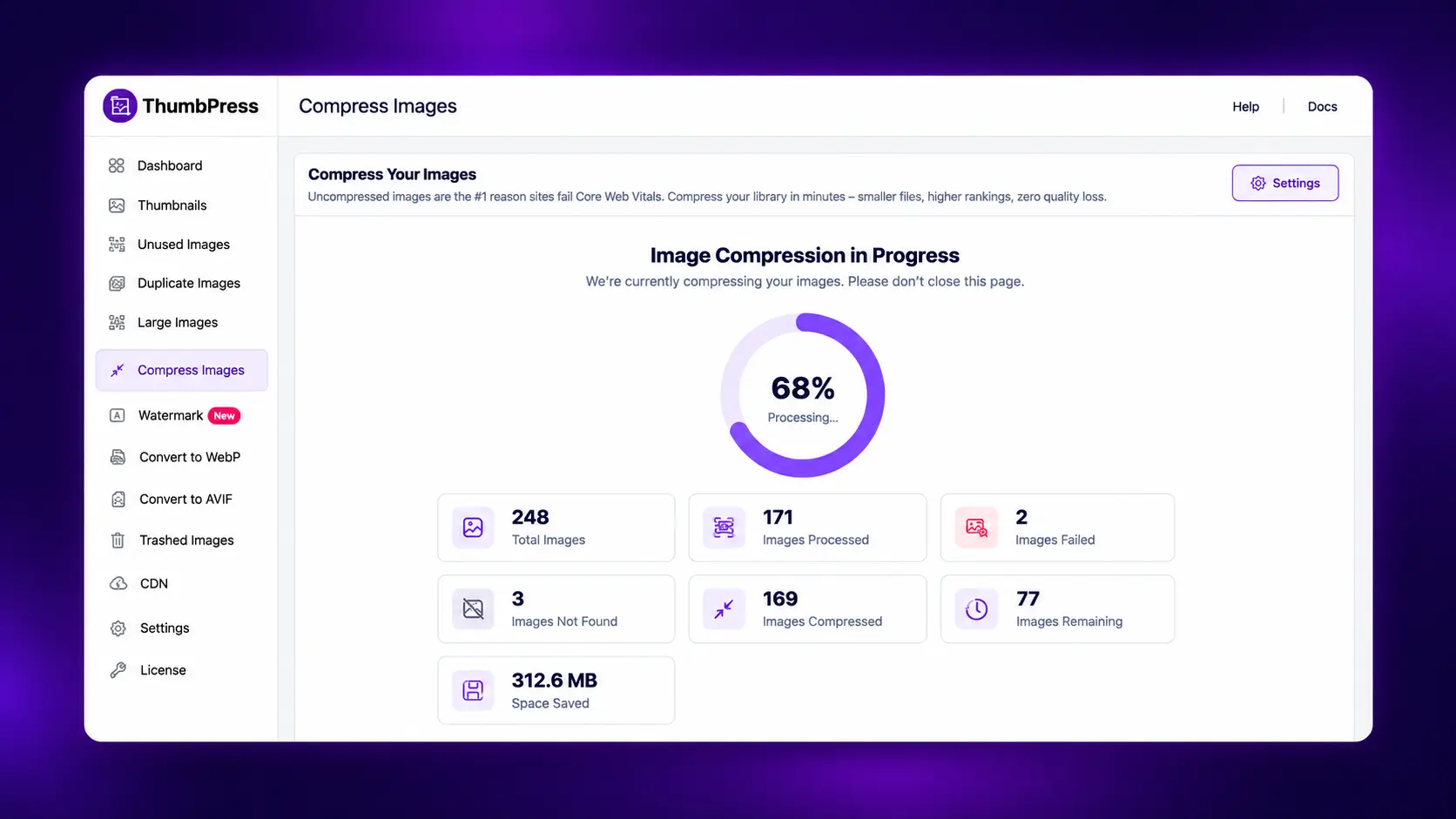
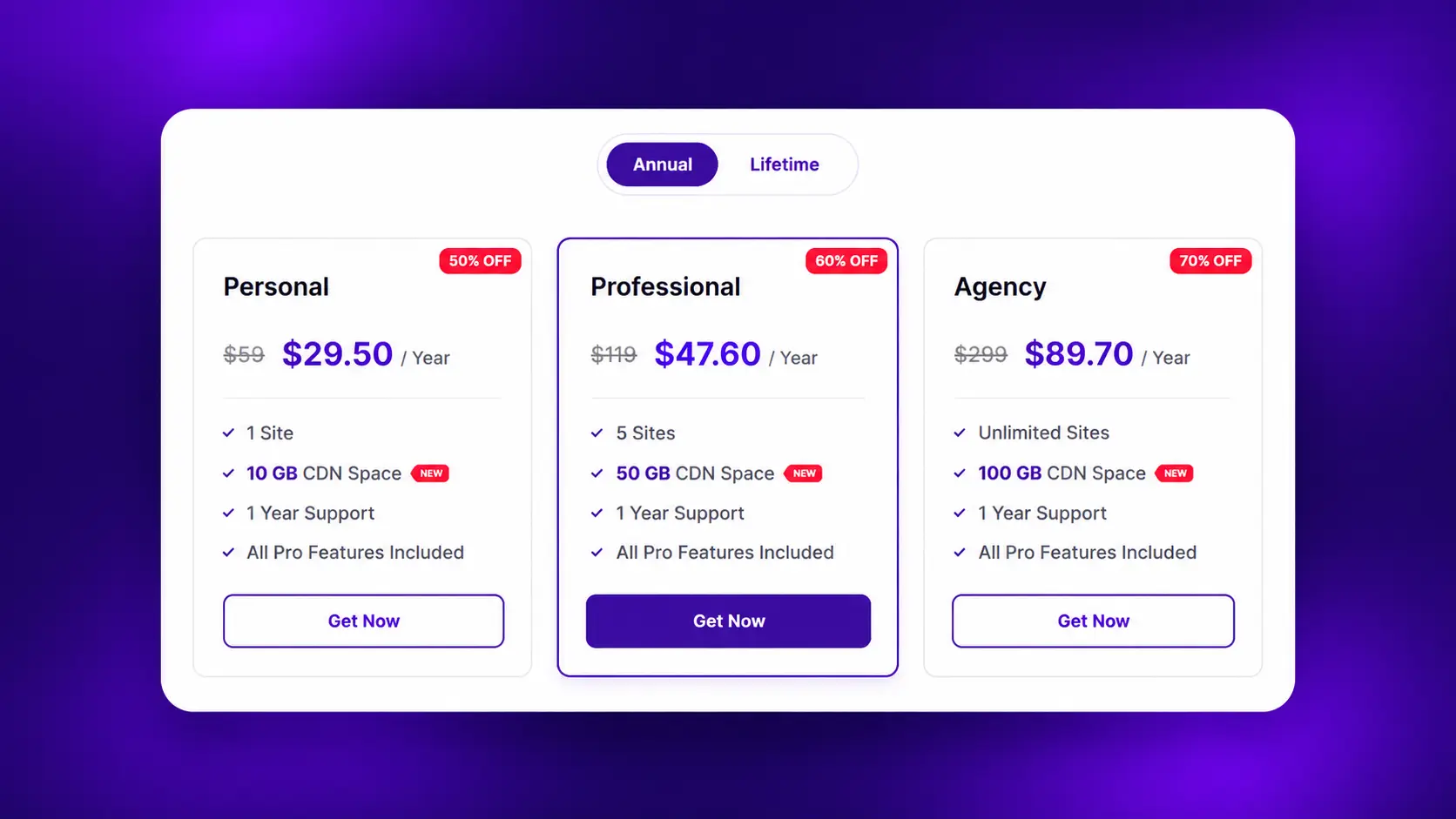
Bulk compression is a ThumbPress Pro feature, and Pro is on sale right now: 50% off Personal, 60% off Professional and 70% off Agency on the ThumbPress pricing page. It is a good week to set it up.
6. Plan a short email and text sequence for your Black Friday campaign
You do not need a long sequence. Five messages cover the season well.
- Teaser (about a week before): Tell people the sale is coming and remind them to join the list.
- Early access (day before or morning of): Give subscribers and past buyers first access.
- Launch (Black Friday): The main offer, one button, the end date.
- Weekend reminder: Highlight best sellers and low stock.
- Cyber Monday and last chance: A clear deadline, with a short subject line.
Write one clear message per email. Use the offer in the subject line, and keep the preview text useful. Do not send the same email to everyone.
Subject line and text examples to adapt:
- Teaser: “Our Black Friday sale starts in 7 days. Get early access.”
- Early access: “You’re in first: 25% off before anyone else”
- Launch: “It’s live: [offer] ends Monday night”
- Last chance: “Last call: [offer] ends at midnight”
- Text: “[Brand]: Early access is open. [Offer] until Monday. [Short link] Reply STOP to opt out.”
7. Reward your best customers first
Split your list into at least three groups: past buyers, subscribers who never bought, and your top customers. Give the top group a private preview a day early, or a small extra bonus. They are the most likely to buy, and they make your sale feel like a reward, not a clearance.
Past buyers also respond well to cross-sells. If someone bought a product last year, show them what pairs with it.
8. Make buying on mobile easy
Adobe reported that 57.5% of Cyber Monday 2025 sales, or $8.2 billion, came from mobile. Buy now, pay later spending also reached $1.03 billion on that day, an all-time high.
Test the full path on your own phone: open the sale email, tap through to the landing page, add to cart and complete the order. Look for small buttons, slow image loads and form fields that are hard to fill in.
If you can offer a fast checkout and a buy now, pay later option, you remove two common reasons to abandon a cart.
9. Use affiliates, partners and social
Adobe found that affiliates and partners drove 21.8% of Cyber Monday revenue, including social media creators. Social media’s own share of revenue was 3.6%, but it grew 56.5% year over year. Partners reach people your list does not.
Contact your affiliates and partners early, share your offer and give them ready-made banners and links. If you do not have an affiliate program, start with five to ten loyal customers or creators and give them a unique coupon code.
WooCommerce stores can track affiliate sales with a plugin, such as our own WC Affiliate, which is part of the Codexpert Black Friday sale too.
10. Show up in search and AI answers
Search and AI tools are becoming a way shoppers find deals. Adobe reported that traffic from generative AI sources to US retail sites rose 670% on Cyber Monday 2025, although the base is still small.
Help both kinds of search find you:
- Publish your deal on a permanent URL with a clear title, the offer, the dates and the terms.
- Add a short FAQ to the page: what is included, when it ends, how returns work.
- Use clear product names and prices in plain text, not only inside images.
- Add alt text to your sale images.
- Update the “last updated” date when the offer changes.
11. Plan the follow-up before the sale starts
The sale does not end on Cyber Monday. Plan three things for December: an extended deal for people who missed it, a thank-you message with a review request after delivery, and a win-back offer for people who browsed but did not buy.
Klaviyo’s figures on repeat-customer revenue point the same way: the buyers you already have are worth planning for.
Track the result against the number you set in step 1. Write down what worked while it is fresh, so next year starts from a better place.
Add customer support to your Black Friday marketing strategy
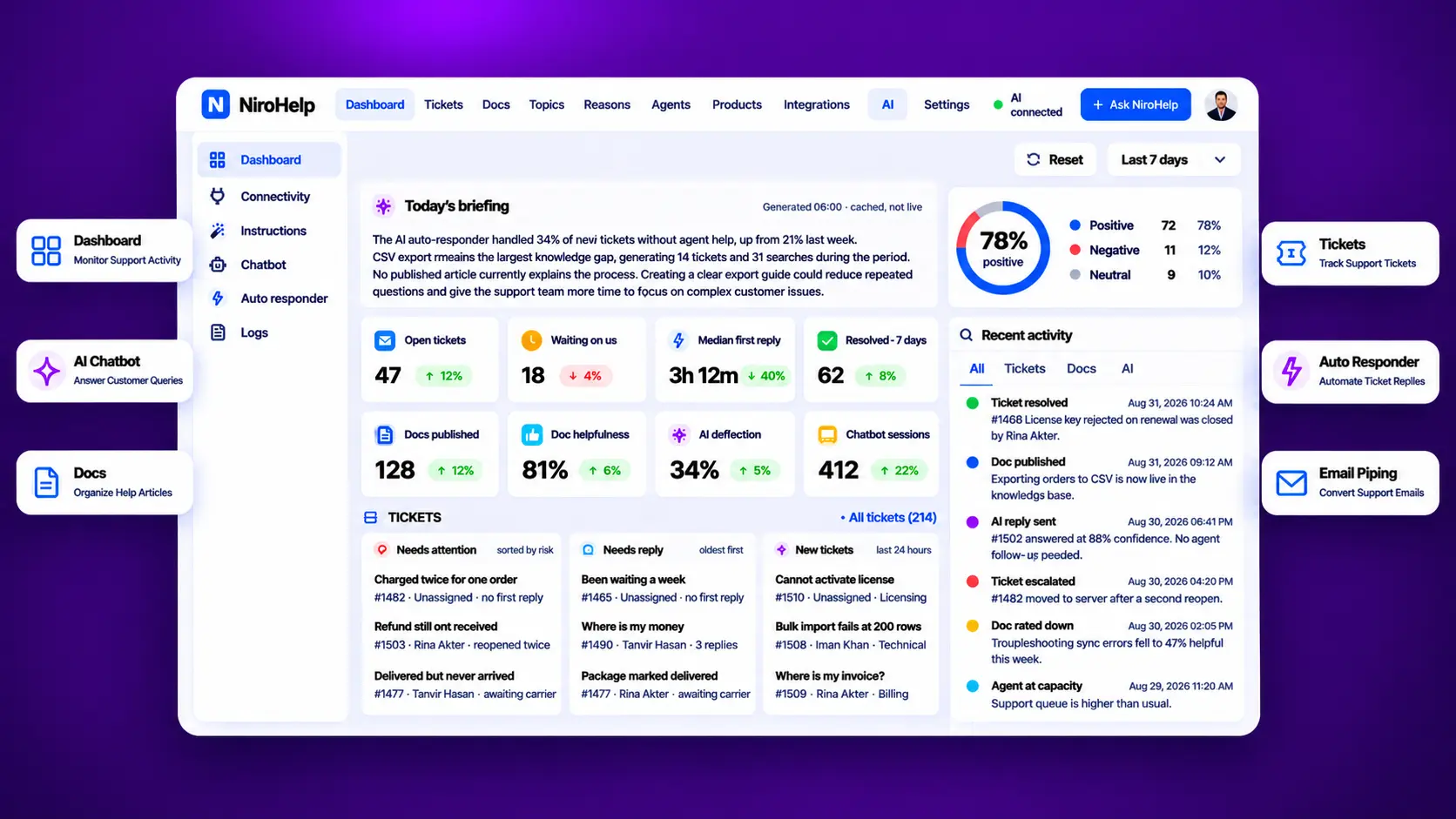
A good Black Friday campaign brings questions: offer terms, delivery, returns and failed payments, often minutes after the email lands. A slow reply costs the sale. Publish short help articles before the sale, link them from your sale page and emails, and track every question as a ticket instead of a shared inbox.
NiroHelp is a WordPress help desk plugin from Codexpert that combines a knowledge base, support tickets and AI in one place. It has a free version on WordPress.org, so you can set it up before November 27.
Black Friday marketing strategy for WordPress plugin and service sellers
If you sell plugins, themes or agency services, the same ideas apply with a few changes.
- Use a deals page. Create one permanent page with your offer, the plans and the terms. Codexpert keeps a yearly Black Friday and Cyber Monday WordPress deals roundup for this reason, and its own offers live on one coupon page.
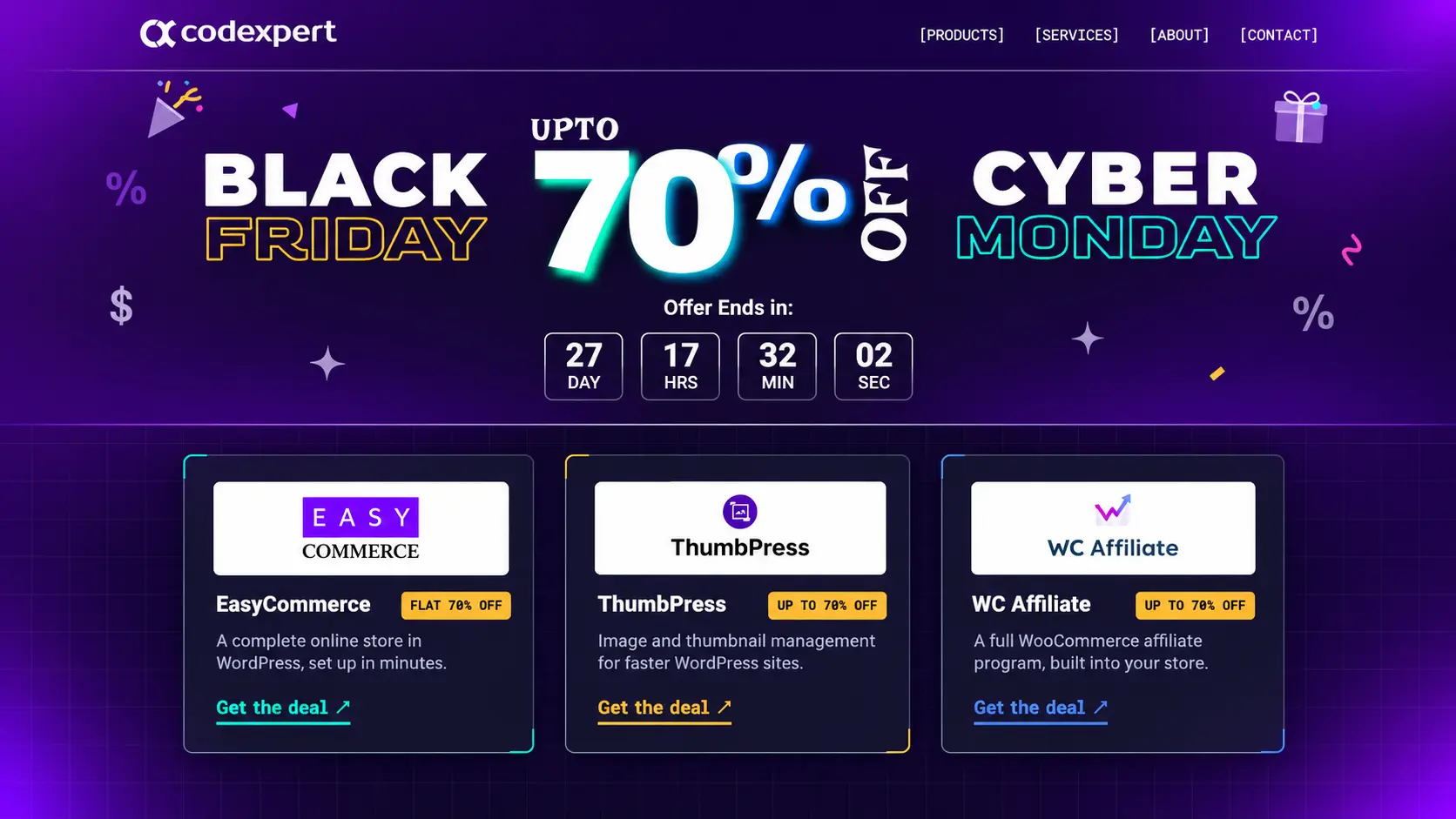
- Tier the discount by plan. A higher discount on larger plans pushes people toward the bigger purchase. ThumbPress does this during the sale: Personal is 50% off, Professional 60% off and Agency 70% off, so the 1-site plan is $29.50 a year and the unlimited-site Agency plan is $89.70 a year. See the pricing page.
- Offer a lifetime bundle. Buyers who dislike renewals respond to a one-time price. Codexpert’s WooCommerce lifetime bundle packs CoDesigner, ThumbPress and WC Affiliate into one $662 purchase (unlimited-site tier).
- Lower the risk. A money-back guarantee helps buyers who are comparing options. ThumbPress offers 30 days, and it covers discounted purchases.
- Tell your existing users. Renewals and upgrades are often easier to win than new customers.
- Publish useful content, not only offers. Guides that help store owners get ready, such as our post on ecommerce website speed optimization, bring in visitors who are already planning their sale.
Common black friday marketing strategy mistakes to avoid
- Starting on Black Friday. By then, shoppers have already picked where to look.
- Discounting everything. It cuts margin and teaches buyers to wait.
- Sending one email to the whole list. Segment, even in a simple way.
- Using a slow sale page. Heavy images lose visitors before they see the offer. See why WooCommerce product pages are slow.
- Not testing on mobile. More than half of Cyber Monday sales come from phones.
- Ignoring the follow-up. The best buyers of the season are the ones you can keep.
How to measure your Black Friday marketing strategy
Check these numbers every day during the sale, and again in December.
- Sales against your target: The number you set in step 1.
- List growth: New email and text subscribers gained since November 2.
- Conversion rate: Orders divided by sessions on the sale landing page.
- Average order value: Did bundles and tiers lift it?
- Repeat-customer share: How many orders came from past buyers?
- Landing page speed: Largest Contentful Paint on mobile, in PageSpeed Insights.
Compare each one with last year, or with a normal week if you have no sale history. Write down what worked so next year starts from a better place.
Black friday marketing strategy checklist
Copy this into your task tool and tick it off.
- Goal and one target number written down
- Margin checked and lowest acceptable price set
- Early-access form live on the home page and checkout
- One headline offer chosen
- Sale landing page built and tested on a phone
- Banners compressed and converted to WebP
- Five-message email and text sequence scheduled
- VIP and past-buyer segments created
- Affiliates and partners briefed with banners and links
- Test order placed on mobile
- December follow-up flow ready
Final Verdict
The best black friday marketing strategy is simple: plan early, make one clear offer, message your best customers first and keep your pages fast. You have about 25 days. Set your goal, open your early-access list and build your sale page this week.
Make sure your sale page and visuals load quickly on every phone. Black Friday and Cyber Monday pricing is live: ThumbPress Pro is 50% to 70% off, from $29.50 a year, with a 30-day money-back guarantee. See the ThumbPress offer or browse every deal on the Codexpert offers page. The sale ends when the countdown on the page reaches zero.
Frequently Asked Questions
Start your black friday marketing strategy at least three to four weeks before Black Friday. Use the first week to set your goal and offer and to start collecting early-access sign-ups. If you are starting later, do the list, the landing page and the email sequence first.
Build an early-access list, make one clear offer, send a short email and text sequence, and reward your past customers first. These cost little and use channels you own. Then make sure your sale page loads quickly on a phone.
It depends on your margin, so work that out first. Klaviyo's data showed that brands with the smallest discounts grew fastest, so a deep cut is not always needed. Bundles, gifts with purchase and tiered offers can be better than a large percentage off.
Yes. Klaviyo reported that email and text together drove 42% of revenue for its brands over the 2025 weekend. Email gives you a direct line to people who already know you, and it does not depend on ad costs.
It helps your campaign work. Sale banners and product photos are heavy files, and a slow page loses visitors before they see your offer. Compressing images, converting them to WebP and lazy loading below-the-fold images keep the page quick. ThumbPress covers these steps in one plugin, and Pro is 50% to 70% off during the sale.
